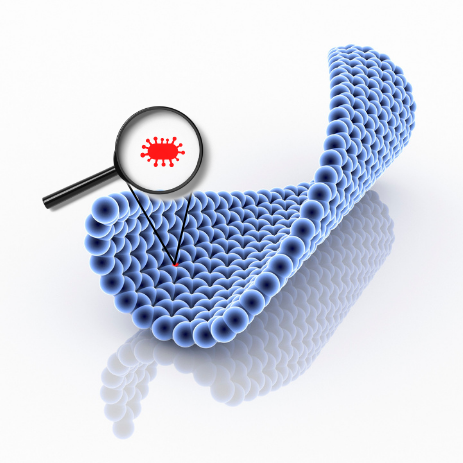
Photocatalysis is the acceleration of a photoreaction in the presence of a catalyst. In catalyzed photolysis, light is absorbed by an adsorbed substrate.
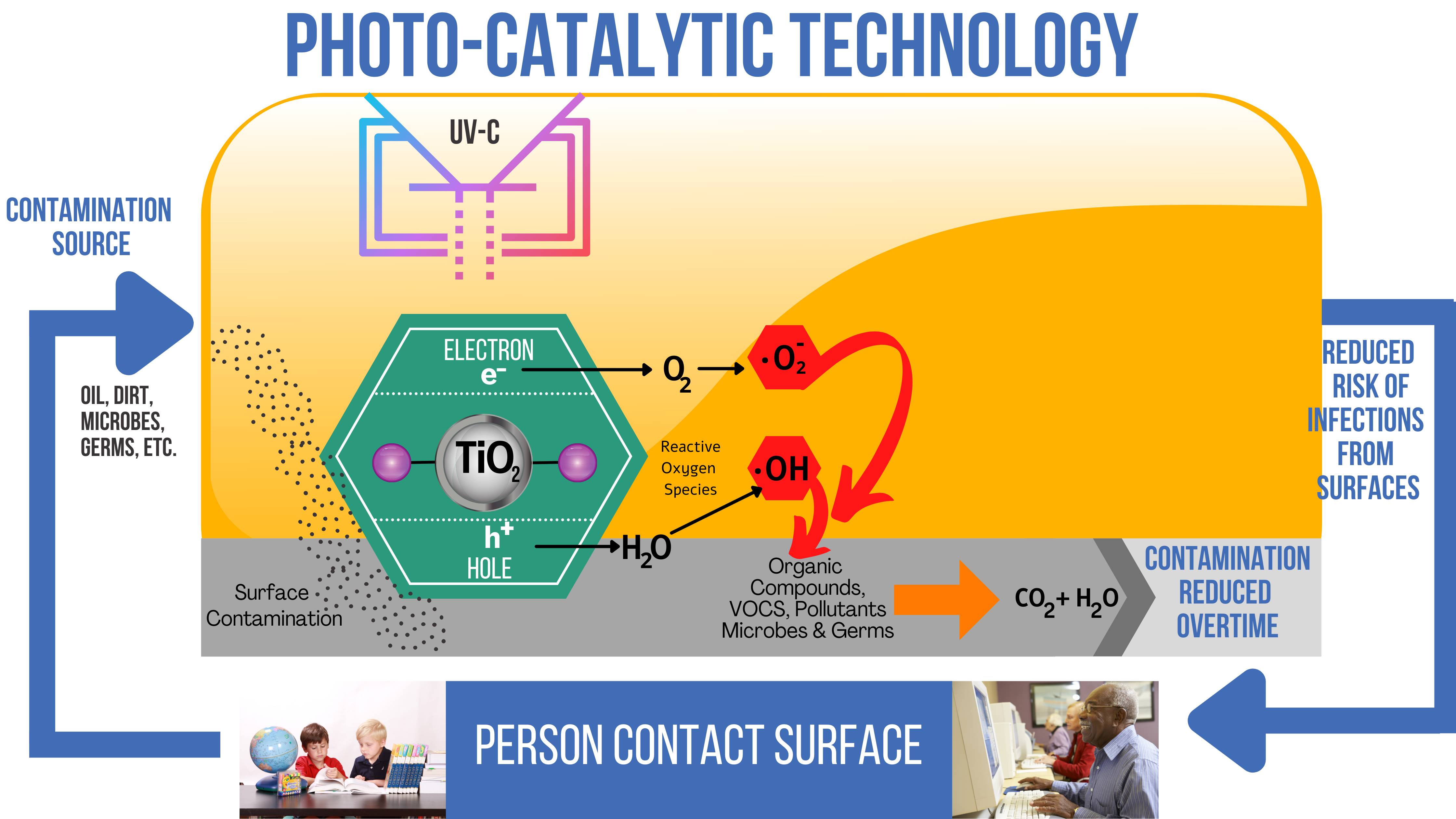
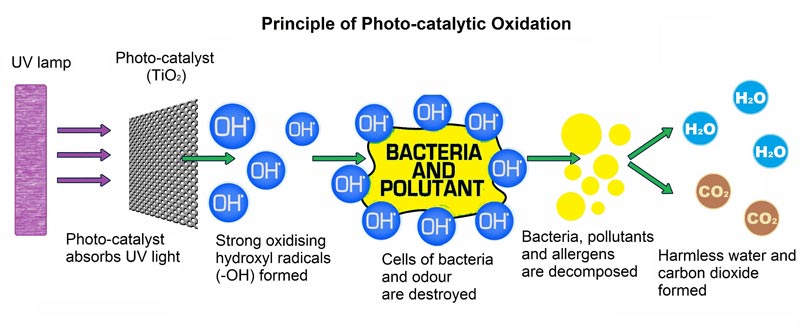
Photo-generated catalysis depends on the ability of the catalyst to create electron-hole pairs, which create free radicals (hydroxyl radical: •OH) able to undergo secondary reactions.
Photocatalyst has the following advantages over any current purification technologies:
- The real destruction of pollutants rather than a simple transfer on a substrate.
- Degradation of pollutants at ambient temperature and pressure.
- Adapted for an extensive range of pollutants (VOC, bacteria, mold).
- Long-lasting protection from germs on the surface.
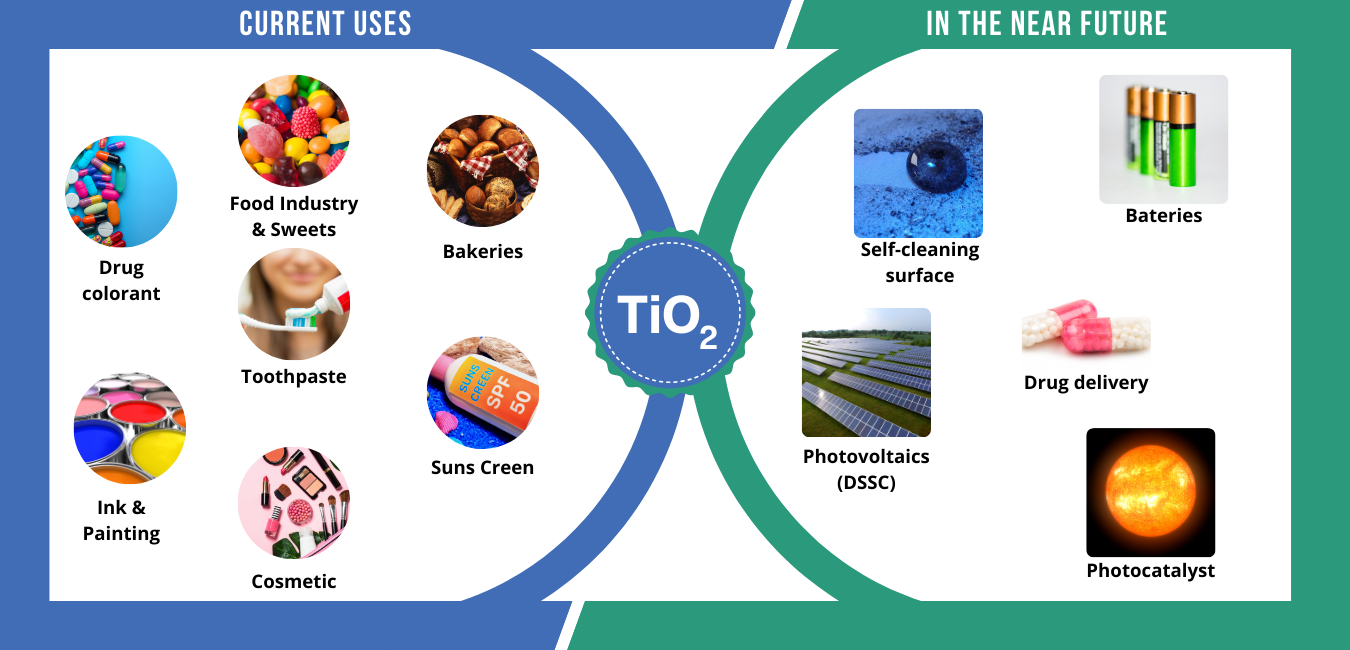
Titanium Dioxide, also known as titanium (IV) oxide or titania, is the naturally occurring titanium oxide, chemical formula TiO2. Approved by the United States Food and Drug Administration (FDA) food testing laboratory, Titanium Dioxide is considered a safe substance and harmless to humans. It is commonly used in paint, printing ink, plastics, paper, synthetic fibers, rubber, condensers, painting colors and crayons, ceramics, electronic components, along with food and cosmetics. Many studies have been published using Titanium Dioxide as a Powerful Photocatalyst for the decomposition of organic compounds.
Titanium Dioxide molecules contain electrons that are confined to relatively narrow energy bands. The band of the highest energy-containing electrons is the valence band, while the band lying above the valence band, i.e., the conduction band, has very few electrons. The difference in energies between the valence band’s highest energy and the conduction band’s lowest energy is termed the bandgap energy. When a semiconductor absorbs a photon of energy equal to or greater than its bandgap, an electron may be promoted from the valence band to the conduction band leaving behind an electron vacancy or “hole” in the valence band. If charge separation is maintained, the electron and the hole may migrate to the catalyst surface, where they participate in a redox reaction with sorbed species.
When Titanium Dioxide exposes to light in the presence of water vapor, two highly reactive substances form hydroxyl radicals [OH] and a superoxide ion [O2-1]. It allows airborne VOCs’ oxidation into carbon dioxide and water at room temperature with UV or near- UV light source. It does not need different energy and uses clean energy found in ordinary life. Specific titanium dioxide has a powerful photocatalytic reaction. It has strong oxidation and decomposition strength.
The FDA food testing laboratory approved the use of Titanium Dioxide (TiO2 ) as a safe substance and harmless to humans. Our agent containing Titanium Dioxide complies with EPA regulations and CDC Guidelines for Disinfection and Sterilization in Healthcare Facilities.
In order to hold to the GCP©’s 12months guarantee, the surfaces must be deeply cleaned before applying the treatment, following the CDC guidelines: “If surfaces are dirty, clean them. Use detergent or soap and water prior to disinfection.”
- Hydroxyl radicals are among the strongest oxidizing species, even more potent than chlorine, ozone, and peroxide. They act as potent disinfecting agents by oxidizing microorganisms’ cells, rupturing them and causing vital composition leakage. Although not all hydroxyls are the same, hydroxyl radicals’ oxidation power has great germ-fighting benefits.
- Titanium Dioxide (TiO₂) is non-toxic and harmless to humans and animals. The photocatalytic reactions on which GCP© is based ensure long-lasting protection against germs for up to 12 months. Do not consume this chemical compound.
Titanium dioxide has strong oxidation effects on single-celled organisms, including all bacteria and fungus. This extreme oxidizing power can destroy bacteria’s cell membranes, causing cytoplasm leakage, and inhibiting its activity, resulting in its decomposition and death. Titanium oxide disinfection is three times stronger than chlorination and 1.5 times stronger than ozonation.